


Savannah Area Weather
and Homeownership Realities
Everyone tells you about the moss and the squares. Nobody tells you what 72 percent average humidity does to a roof, a crawl space, or an HVAC system over ten years. That's the part that hits your wallet, so that's what this page is about. I'll give you the climate honestly, then walk through the home-condition realities most relocation guides skip. If you're eyeing a specific house, I'm happy to walk through what to watch for before you fall for it.
The Climate, Month by Month
| Month | Low °F | High °F | Rain days | Precip (in) |
|---|---|---|---|---|
| Jan | 40 | 61 | 9.3 | 3.69 |
| Feb | 43 | 65 | 7.9 | 2.79 |
| Mar | 49 | 71 | 7.4 | 3.73 |
| Apr | 55 | 78 | 6.6 | 3.07 |
| May | 63 | 85 | 6.5 | 2.98 |
| Jun | 71 | 90 | 10.9 | 5.95 |
| Jul | 74 | 92 | 11.3 | 5.60 |
| Aug | 73 | 91 | 12.8 | 6.56 |
| Sep | 69 | 86 | 9.3 | 4.58 |
| Oct | 59 | 79 | 6.8 | 3.69 |
| Nov | 48 | 70 | 6.9 | 2.37 |
| Dec | 43 | 64 | 8.2 | 2.95 |
| Annual | — | — | 101.6 | ~49.96 |
(Source: NOAA Climate Normals 1991–2021. Last spring frost ~March 12, first fall frost ~Nov 21. Hurricane season June 1–Nov 30. Yes, it snows occasionally: Jan 2018, 2025, and 2026.)

The Humidity Tax
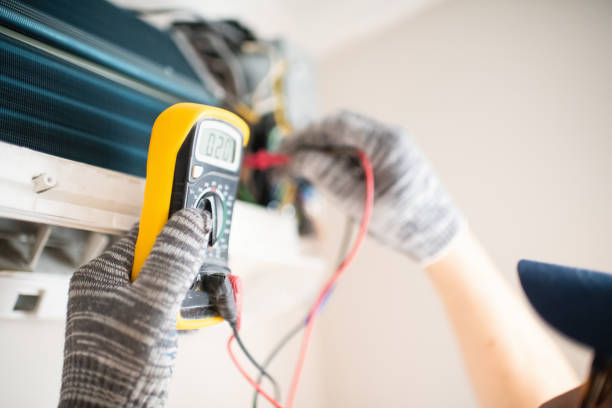
Humidity here runs 60 to 80 percent year-round, averaging around 72 percent, with summer mornings near 86 percent. You adapt to that with good AC and a sealed home. What you don't escape is the maintenance bill. Mold starts growing above 60 percent relative humidity and colonizes fast above 70 percent. Your AC runs 9 to 10 months a year here versus 4 to 5 up north, which is why systems wear out sooner (more on that below). A lot of local homeowners end up adding a whole-home dehumidifier, which runs $1,500 to $3,000 installed.

Roofs and HVAC Age Faster Here
| Roof material | National | Georgia | Why shorter |
|---|---|---|---|
| 3-tab asphalt | 20–25 yrs | 12–18 yrs | Heat, UV, humidity, storms |
| Architectural shingle | 25–30 yrs | 18–25 yrs | Better granule adhesion |
| Class 4 impact-resistant | 25–30 yrs | 25–30 yrs | Minimal reduction |
| Metal | 40–70 yrs | 40–70 yrs | Recommended near the coast |
| Slate | 75–100+ yrs | 75–100+ yrs | No reduction |
Georgia roofs run about 20 percent shorter than national benchmarks, and untreated black algae can shave off another 3 to 7 years.
| HVAC | National | Savannah | Near-coast |
|---|---|---|---|
| Central AC | 15 yrs | 10–14 yrs | 10–12 yrs |
| Heat pump | 14 yrs | 10–13 yrs | 7–12 yrs |
| Gas furnace | 18 yrs | 15–20 yrs | 15–18 yrs |
Southeast minimum efficiency has been 14.3 SEER2 since January 2023. For this climate I'd look for 16 to 18+ SEER2 with a variable-speed system and a real dehumidification mode. (Sources: Georgia Home Roofing, LL Roofs, Coastline Heating & Air, ACME Heating & Air.)
Foundations, by Era
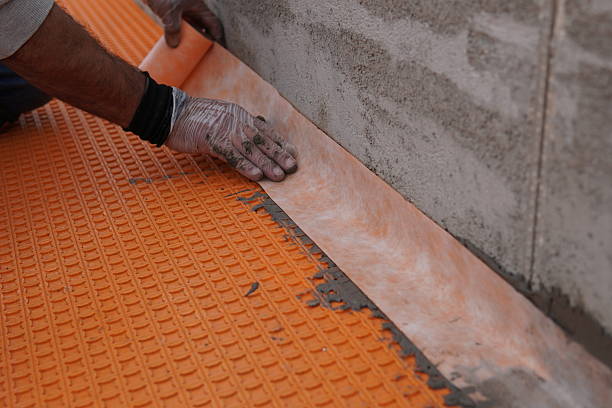
What's under the house depends on when it was built. Pre-1960 and historic homes (Historic District, Ardsley Park, Thomas Square, Isle of Hope) usually sit on pier-and-beam or raised crawl space. Post-1980 suburban builds (Pooler, Richmond Hill, Southside) are mostly slab-on-grade. Pre-1900 downtown often has original brick or stone piers, and VE flood-zone homes on Tybee and the water are on elevated piles.
Each has its own headache. Slabs in our clay soils crack and settle as the clay expands and contracts ($300–$1,500 for epoxy crack injection, $2,225+ for structural repair). Crawl spaces fight wood rot and mold on unencapsulated joists; encapsulation runs $5,000 to $15,000. Both are termite-vulnerable, which brings me to the next part.
Termites Are Not Optional Reading
Chatham County is USDA TIP Zone 1, the highest termite-risk classification in the country. We have native subterranean termites everywhere, plus confirmed Formosan colonies that run 5 to 10 times larger than native species. A wood-destroying organism (WDO) inspection at closing is standard practice here regardless of loan type, and it's cheap insurance ($75–$200).
| Treatment | Cost |
|---|---|
| Liquid barrier (Termidor SC) | $1,150–$3,400 |
| Sentricon bait system | $1,400–$3,800 |
| Whole-structure fumigation (drywood) | $2,200–$5,500 |
| Annual bond renewal | $185–$325 |
| Formosan premium | 25–40% above standard |
Mold Remediation, So You Know the Numbers
| Scope | Cost |
|---|---|
| Single bathroom | $500–$1,500 |
| Crawl space | $2,000–$5,000 |
| Whole room | $2,500–$6,000 |
| Post-flood, multi-room | $4,000–$15,000+ |
| Whole-house | $10,000–$30,000+ |
Sources: MoldRemediationSavannahGA.com, Angi.
Georgia has no state mold contractor license, so verify IICRC (WRT or AMRT) or ACAC credentials before you hire anyone.
Hurricanes and Your Evacuation Zone
Know your zone before you buy, because it shapes both your insurance and your exit plan.
Zone A (red): east of Truman Parkway and the Vernon River, all barrier islands, Tybee. Evacuate for any Cat. 1+.
Zone B (orange): west of Truman to I-95. Evacuate Cat. 2+.
Zone C (purple): west of I-95. Evacuate Cat. 3+.
There are no public hurricane shelters inside Chatham County, so every resident's plan has to be "go inland." For Cat. 3+ storms, mandatory countywide evacuation starts about 30 hours before tropical-storm-force winds, and I-16 goes contraflow (all lanes westbound for 125 miles). The city has ordered two mandatory countywide evacuations since 2016, Matthew and Irma. Look up any address at public.sagis.org/evaczones. Average homeowner's insurance here is about $2,817/year; flood adds $425 to $2,173. (Source: Chatham County 2025 Hurricane Guide.)
Buying a Historic Home? Meet BHAR
If you buy in a historic district, exterior changes visible from the street need a Certificate of Appropriateness from the Board of Historic and Architectural Review before you start. Interior work is unrestricted on its own, but that changes if you're using a historic tax credit or a preservation assistance program to help fund the renovation, those do come with interior oversight, so check the fine print before you count on a fully hands-off interior. The catch most buyers don't price in: standard vinyl windows aren't approved, you'll need wood or clad-wood period profiles (impact-resistant glass in appropriate frames is approvable for hurricane protection). Filing fees are modest, $25 to $250 depending on project size, but doing work without approval doubles the fee and can mean undoing it.
A Historic District home can carry roughly $40,000 to $80,000 in extra ownership costs over ten years versus an equivalent non-historic home. That's not a reason to skip it, the homes are spectacular. It's a reason to budget with eyes open. (Source: MPC COA Instructions.)
If you are weighing an older house against a new build, I compare historic homes vs new construction in Savannah on review rules, insurance and the tax side.
FAQ
Is Savannah too humid to live in?
Most people adapt fine with good AC and a sealed, dehumidified home. The real cost is maintenance: roofs, HVAC, crawl spaces, and paint all age faster.
How hot does it get?
Highs average 90 to 92 from June through August, with heat index hitting 104 to 110+ in heat waves. Nights stay in the low-to-mid 70s.
How bad is hurricane season?
Real but manageable with a plan. Two mandatory countywide evacuations since 2016. Season runs June through November, peaking August and September.
How long does an HVAC last here?
Central AC about 10 to 14 years (15 nationally); coastal heat pumps 7 to 12. Plan to replace sooner than you would up north.
How long does a roof last?
3-tab asphalt 12 to 18 years, architectural 18 to 25, metal 40 to 70. Treat algae or lose more time.
Does Savannah have a lot of termites?
Yes, highest national risk tier. Get the WDO inspection and keep a bond.
What's the BHAR?
The board that reviews exterior changes in historic districts. COA required before work; interiors unrestricted unless a tax credit or assistance program applies; no standard vinyl windows.
What foundation will the house have?
Pre-1960 and historic: pier-and-beam or crawl space. Post-1980 suburbs: slab. Pre-1900 downtown: brick/stone piers.
Does it snow?
Rarely. Brief sub-2-inch events in 2018, 2025, and 2026. The city isn't equipped for it.
A Note From Me
Before you write an offer here, the smartest thing you can do is read the home's condition through a climate lens: roof age, HVAC age, foundation type, crawl space, and termite history. Send me the address and I'll walk you through what to expect on each of those, so there are no surprises after closing.
Thinking about making a move?
A simple conversation, with no expectations, is where we start. Tell me where you are in the process and I’ll help you think through what comes next. Whether you’re relocating for work, retiring to the coast, or still deciding whether Savannah is the place, I’m Nikki Gergacs, a Realtor with Next Move Real Estate, and I’m happy to talk it through. Call or text 912-378-3427.
The Coastal Edit
One email a month. Savannah market notes, the homes I’m crushing on, and the local finds I’d tell a friend about. I don’t spam, I don’t share your email, and you can leave anytime.